Alice
Vessel Name: Alice
16 unnamed divers/crewmen
14 July 1915
Lost when Alice struck Brue Reef; bodies not recovered
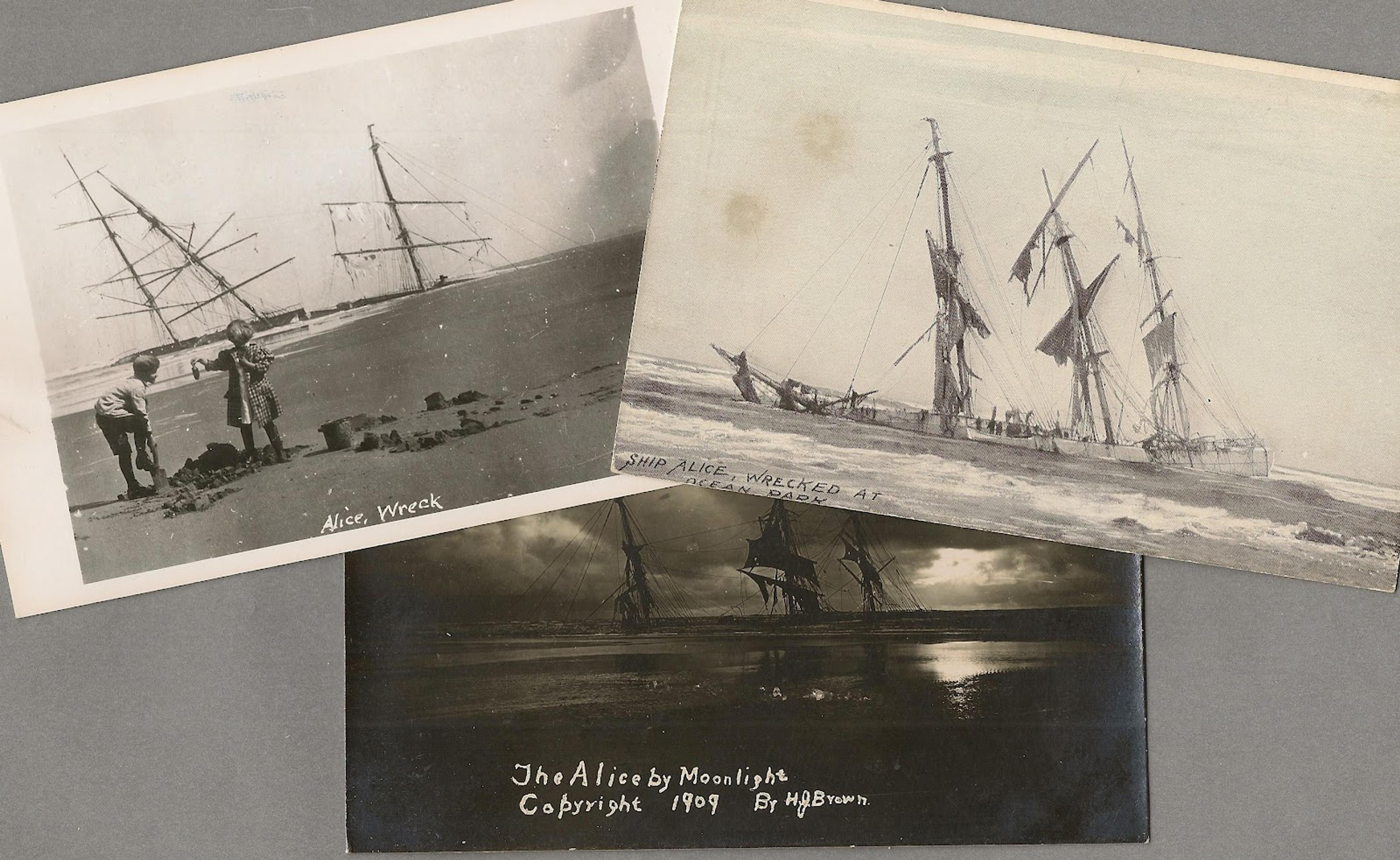
The wreck of Alice courtesy of HJ Brown
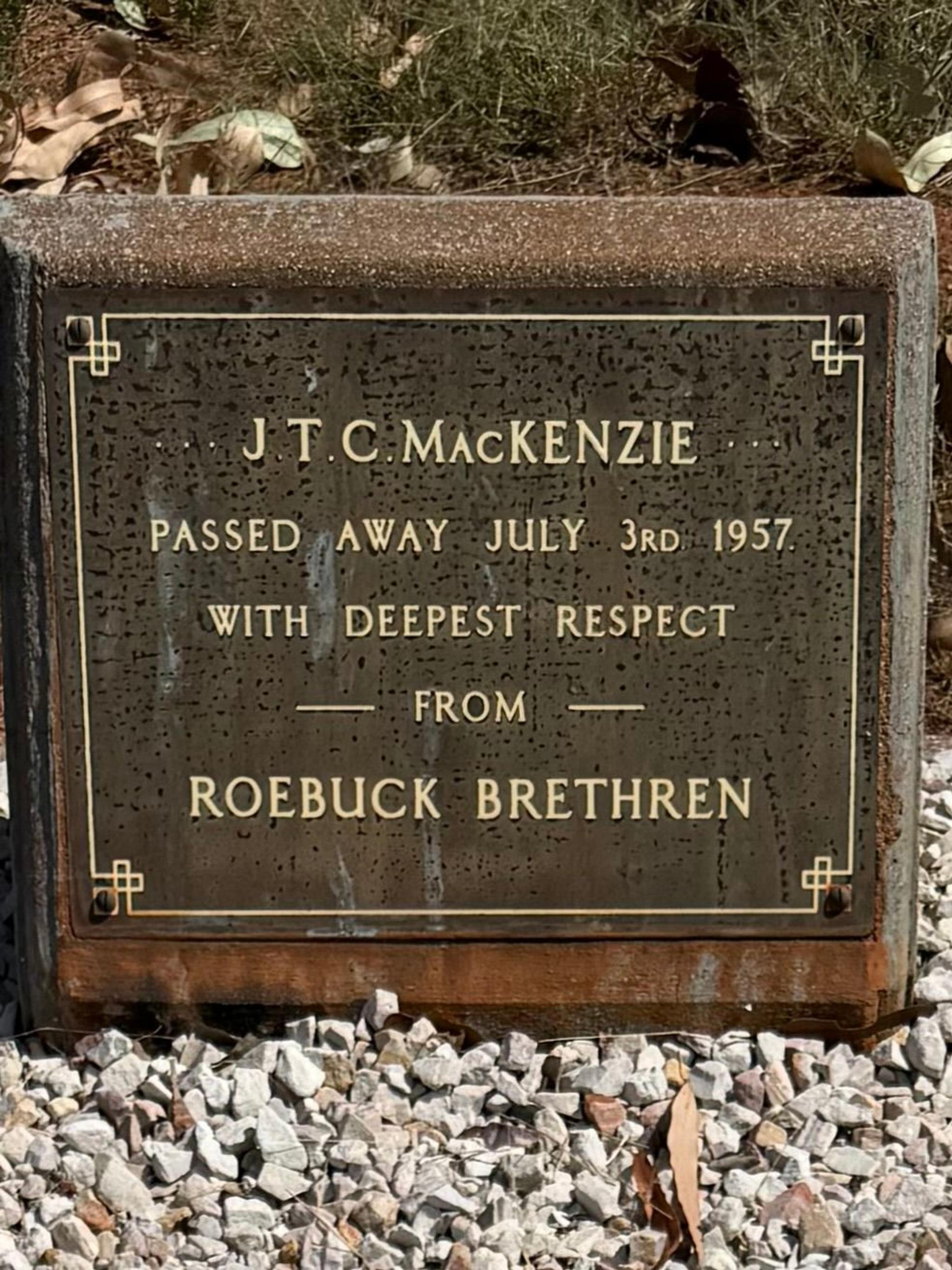
James MacKenzie's headstone at Roebourne
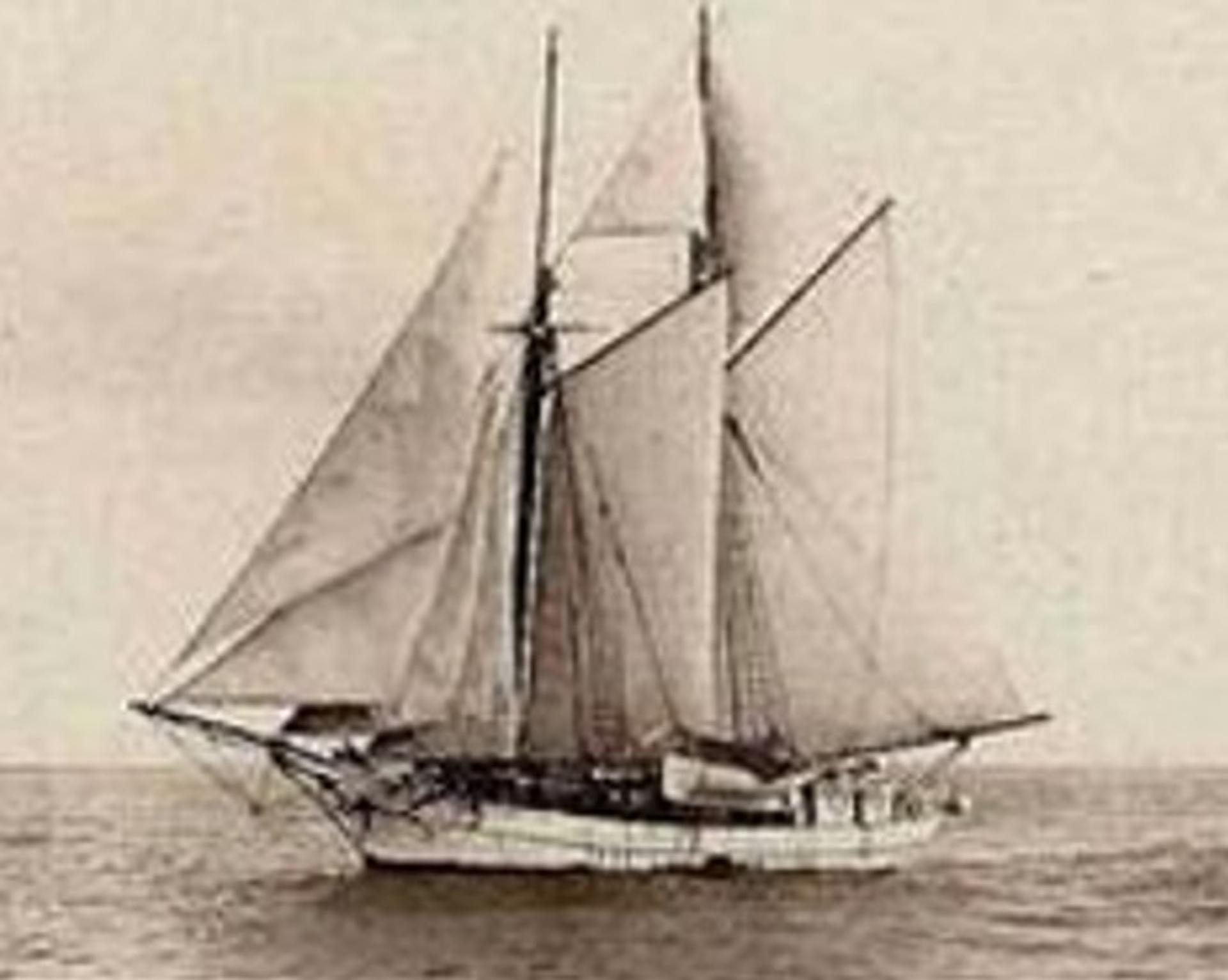
Alice. Courtesy of Jill Brown.
Restrictions at the turn of the 18th century saw the tightening of the pearl industries use of women and children as divers, and disapproval of abduction and slavery of Aboriginal divers and crew [known as blackbirding]. As a result, James Clark founded the Celebes Trading Company [CTC] in 1904 and began pearling in the waters around the Aru Islands, which at that time were governed by the Dutch East Indies.
Cordial relationships between Australia and the Dutch East Indies enabled Aru Islanders to work on board pearl vessels seasonally relocating between Western Australian and Northern Territory pearling grounds. The boats were registered in Western Australia and flew the Dutch East Indies flag when pearling around the Aru Islands. James indentured crews from the Moluccas: Tual, Bandaneira and Ambon.
In 1915 James Clark moved 32 of his schooners and their luggers to Broome, including schooner number 24 Alice. She was 132 burthen tons. She was registered in the names of Thomas Clarke (James’ brother) and his wife. Alice was accompanied by her sister schooner Ruby. Alice was a new boat, and uninsured. She was loaded with diving equipment, supplies and stores with a total value of £5000.
Alice’s master was Captain James [Jim] Theodore Clewitt McKenzie, born in Melbourne in 1875.Records indicate he married in 1911 to Gwenllian Giblin in New South Wales although no evidence of children was found.Jim relocated to Roebourne following the pearls.He was fortunate to live until he was 82 years of age, retiring to Perth. He was buried in Broome Cemetery. Jim had a reputation of being a good and fair captain. Some of his crew had sailed with him for 12 years or more.
Alice’s mate, navigator and chief officer was George Kenny who was hired from Queensland. He made his way to join the schooner at Sydney expecting to take command. When he went aboard, he discovered James Clark had employed Captain McKenzie (not actually qualified as a Captain) and so accepted the role of first office/mate and navigator. Not a great deal has been recorded about George, other than he was single and an experienced seaman.
The second mate aboard the Alice was Charles Franklyn “Frank” Fuhrmann. Frank came from New South Wales from a farming family.Most of the men in his family served in the Australian Infantry, and Frank was recently discharged from his Sergeant’s position during World War One service.Two of his brothers died during the war. Frank was single, an accountant prior to military service, and he was given the responsibility of company clerk aboard the schooner.
James took the Alice with an Aboriginal crew of 15 to the Aru Islands, where he had arranged to sign on 18 divers and deckhands to add to his crew working the two schooners and 32 luggers under his command: Toba, Oedjir, Maikor, Kavite, Caneele, Aru, Esta, Tejin, Jeean, Kapayapaan, Tempanza, Aronina, Meriri, Karang, Awang, Tanadolplin, Antepolo, Colarme, Ibis, Essie, Isobel, Edith, Crane, Jean, Gondolier, Nyoola, Mascotte, Waterwitch, Wylenia, Jessie, Our Boys and Eileen.
James left the islands on 16 May 1915 with 38 crew. After calling in at Dobo Island, he set off for Thursday Island and Torres Strait Islands.
They flew the Dutch Flag through the Dutch East Indies waters.Alice was registered in Australia, but it made for easier passage to fly the Dutch flag through the East Indies. This became controversial when the schooner wrecked, as Australian authorities did not investigate the loss in the same way that other Australian vessels were investigated.
In truth the Master Pearlers Association felt daunted by the size of the Celestial Trading Company fleet and tried to block their entry to Broome.However, James had influence and had fleets in the Aru Islands, Indonesia, Thursday Island and Torres Strait Islands. He owned approximately 200 luggers and schooners. James Clark was known as “The Pearl King”.
So, the fleet left the Northern Territory waters bound for Broome. Over the days that followed the fleet spread out. Some luggers peeled off to collect water onshore, and others to maintain the supply of firewood for cooking. They had set a course for the northernmost tip of Western Australia intending to follow the coast south to Broome, taking a wide berth of the Buccaneer Archipelago. When a heavy squall between Northern Territory and Western Australia struck the fleet the 24 schooners headed directly to Broome and left the larger Alice and Ruby waiting to round up stragglers.
There was no sighting after a two day wait, so Jim McKenzie sent Ruby to follow the coastline south and check islands on the way. Alice and eight luggers proceeded to Cape Londonderry on a more direct route. Ruby did not see any of the Clarke fleet, and Jim sent her and her luggers to Cape Leveque. On 2 June Alice’s chronometer broke. James set a direct course for Broome, where the fleet was bound.
On 13 June one of the jaws holding Alice’s main gaff broke. The crew lowered the sails and made repairs as best they could. Jim McKenzie had given the master of Ruby new charts and saved an older worn set for himself. With the schooner’s chronometer broken and old charts, navigation was not easy.
On 14 June Jim tried to anchor several times but could not find the bottom. He pointed Alice to what he thought would be the safest route. At 7.30pm Charles Fuhrmann and the watchkeeper saw a dark line in the water and sounded an alarm. Charles climbed the main mast shrouds and saw a large reef. George saw the tide was ebbing and alerted the crew. It was too late.
The schooner struck Brue Reef off Caffarelli Island and impaled herself on a jagged outcrop holing her starboard side and she was helplessly caught. Jim ordered the sails be brought down and a launch lowered. Unfortunately, the bungs had not been placed in the bottom of the launch, and it immediately sank. A dinghy was lowered quickly. The line securing it to the schooner parted in the rough water and the dinghy was washed onto the reef.
As the tide turned Alice pounded on the reef, water rushed into the hull and she listed to port. George ordered the crew onto the reef as she looked like she would roll and sink. The men jumped from the bulwarks, some having to swim to the reef as Alice slid off the rock into 20 feet of water. Three crew members were unwell and had been in bunks in the fore hold. They were unable to gain the deck and drowned as the schooner sank. Their bodies were not recovered. Alice settled with her masts visible above the waterline.
Charles and George gathered the 37 crew who were spread across the reef. As the tide rose it became obvious that the reef would be submerged. They ordered the men into the rigging above the tide. Some men were able to get into the small remaining dinghy from the schooner. Others scrambled into the top masts to get out of the water. Thirteen Malay crewmen refused to climb the rigging. They remained on the reef and could not be encouraged to leave. The surging tide washed them away and they were not seen again.
On 15 June it was decided George, Charles and seven deckhands would take the dinghy and head south for help. They left at 12pm and rowed non-stop to the beach under Cape Leveque lighthouse, arriving at 3am on 16 June. They told Lightkeeper Jeapes that the Alice was wrecked on Brue Reef and the survivors needed rescue.
At daybreak Lightkeeper Jeapes sent his assistant keeper to inform Police Constable Rea at Pender Bay. Jim had many First Nations workers along the coast and on islands close to the coast.They were used to send word to the mission at Chilli Creek to the south and ask for them to look out for survivors and wreckage. Local Aboriginal people were engaged to search the coast and nearby islands for survivors.
Chilli Creek Mission’s lugger Salvadore had just docked at Cape Leveque and was immediately ordered to return to the wreck with George and Charles. They towed Alice’s little dinghy behind them. PC Rea was located at a station partway to Cape Leveque. He immediately set out across country to the lighthouse.
The Salvadore found Jim McKenzie and the remaining 18 crewmen. Jim had lashed them to the topmost rigging. They were dehydrated, exhausted and had exposure, but were alive. Using the little dinghy used by Charles and George, and the dinghy from the Salvadore the men were transferred from the wreck to the waiting mission vessel.
Ruby had been waiting at Cape Leveque with her luggers unaware of Alice’s fate. On 16 June she was seen near the lighthouse, and Lightkeeper Jeapes signalled her in. Upon receiving word of the wreck Ruby made her way to Brue Reef, while two of her boats were sent to Broome with a report for James Clark and the fleet.
Jim, George and Charles went with the Ruby to begin salvage work. Jim recovered the ship’s log and papers. The crew salvaged diving equipment, gold coins and some of the crew’s personal effects.
Ruby left with her luggers and made for Broome. The remaining 24 boats that had been scattered arrived there safely. A schooner was sent to Broome with statements made by George, Police Constable Rea from Pender Bay Police Station and Light Keeper Jeapes.
No trace of the 13 missing Malay crew men was ever found. The tides, sharks and crocodiles in the area made it unlikely any of the crewmen could survive. This loss warranted only a paragraph in newspapers because they were more focused on the start of the world war.