Ralph Entwistle
Ralph Entwistle
Disappeared in 1846
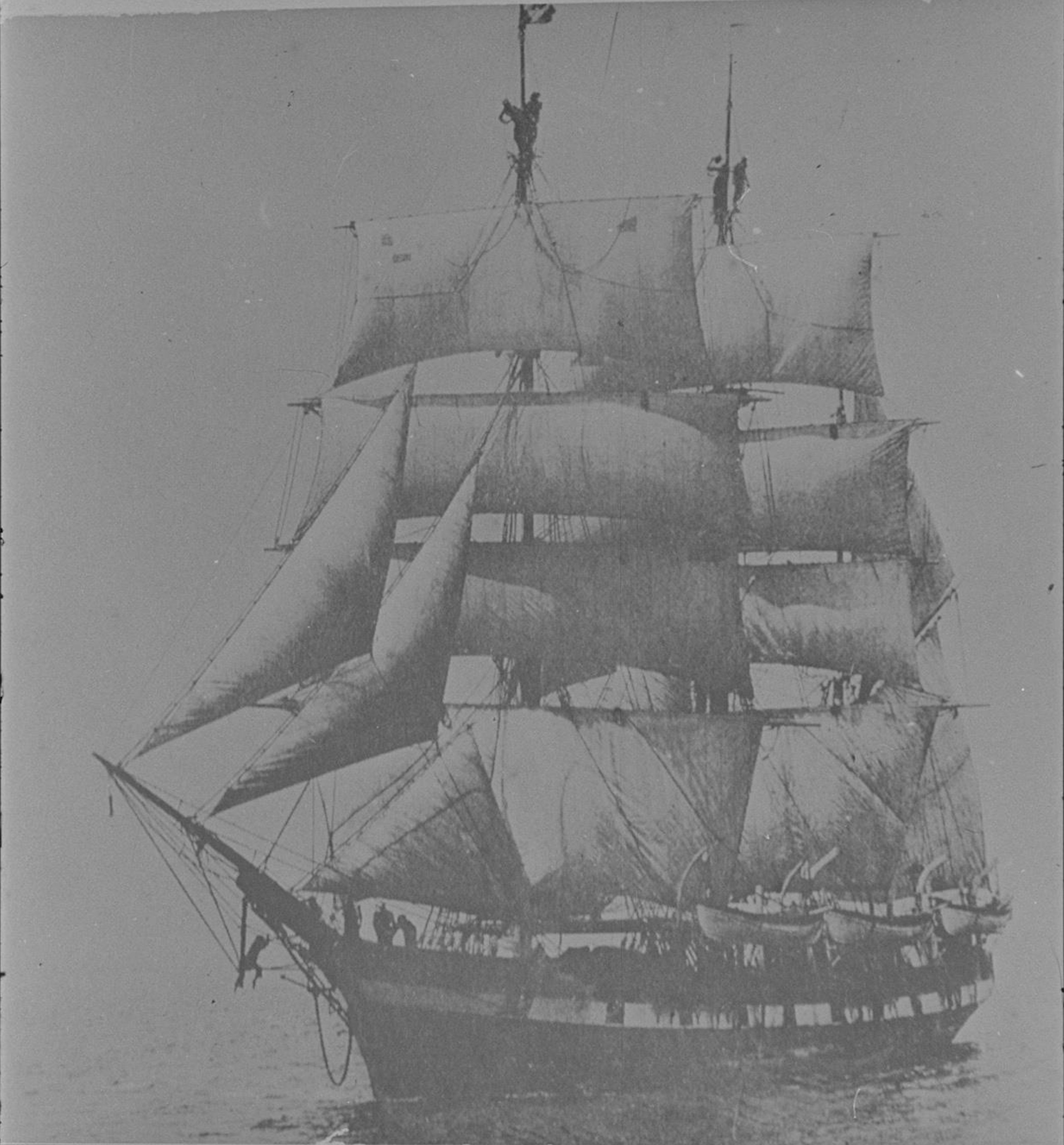
American Barque
Ralph Horrowly Entwistle was born in 1822 to parents Anyon (Pigeon Anyon) Entwistle and Jennet (Jane) Walkden. He was the eldest of three children born in Darwen, Lancashire. There was a younger brother Anyon Gardiner born in 1824 and younger sister Hannah born in 1828.
Ralph’s father Pigeon Anyon was a fun-loving entertainer, a peace-egger. Peace-egging was a tradition of Lancashire and Yorkshire. The term refers to actors collecting eggs for easter performances, dressed as characters from medieval mystery plays. Pigeon Anyon was the fifth son of 11 children, and he was used to turning his hand to labouring work to feed his family.
The family emigrated, five of 72 passengers paying steerage to Fremantle, Western Australia per the brig James leaving England in 1829. Jane and two-year-old Hannah did not survive the arduous journey. Pigeon Anyon and his two sons landed in Fremantle on 8 May 1830, and he was left to raise two sons in his new country.
Anyon became indentured to Parr & Sales who had a property at Beereegup (Willagee and Melville, near Point Walter). The property was taken over in 1830 by Archibald Butler who arrived in Western Australia in January,1830. Anyon’s indenture was transferred to him. Anyon Junior was indentured to Archibald as well. He was six years of age. Ralph was apprenticed to an upholsterer at the age of eight and learnt that trade.
Archibald Butler was granted land at Beereegup and Avon. He and his brother John were granted property, and John opened a licensed halfway house between Perth and Fremantle.
Pigeon Anyon and Ralph were at Beereegup on 5 August 1831. The Butlers were away at the time. A group of Noongar Aboriginal men carrying spears attacked the house in retaliation for the shooting of one of their family members by Archibald Butler days before. The Indigenous man had stolen potatoes from the garden and Archibald had fired his gun, killing him.
When the attack started Ralph hid under a bed, but Anyon faced his attackers. He was speared twice and killed. When Anyon lay dead in the yard, the attackers entered the house, searching for Ralph. They thrust their spears through the mattress. Ralph was hunched in a corner, and the spears narrowly missed him.
Pigeon Anyon was buried at the Alma Street cemetery in Fremantle by officially authorised Lancelot Taylor Cook. At the age of eight Ralph became an orphan and the only relative in Western Australia of his younger brother.
Two years later in 1833 Ralph was able to identify Yagan and Midgegooroo who led the group to attack the Beereegup property and kill his father. His deposition to the court aided prosecution of the men who carried out the attack.
Life changed for Ralph and Anyon after that. Aside from the trauma they experienced, they found themselves alone. The Post Office advertised they were holding mail for Pigeon Anyon which went uncollected, indicating the boys’ English family lost contact with them.
Further tragedy occurred in the following year. There was no one to shield Anyon Junior from his master’s harsh treatment. It is unclear what occurred; however, it is recorded that Anyon was “punished” by Archibald Butler, and “became ill” as a result. He did not survive the incident. He died on 7 September 1832, at the age of seven years, and was hastily buried in the Alma Street cemetery by Archibald Butler, who was written in the burial record as the “cause” of Anyon’s death. Neither Anyon nor Pigeon Anyon had headstones.
In later years the cemetery was closed, and in 1855 both the Entwistles were disinterred and their remains relocated to the Skinner Street cemetery. There is no record of the plot numbers they were buried in. At that time pauper graves were not allocated lots but were buried in a far corner of the cemetery.
Ralph continued alone. He worked as a thatcher and an upholsterer to support himself, raining in the area around Fremantle. On 16 October 1846, at the age of 24 years, he married Mary Ann Maxworthy. She had emigrated to Western Australia since 1829.
The following year Ralph and Mary Ann had a daughter and called her Elizabeth. It is unclear whether Ralph was in Fremantle when Elizabeth was born.
Local men rowed out to the whaleships that visited Fremantle in the whaling season. The whalers moored outside the harbour to avoid paying the heavy dues the harbour demanded, so to carry out trade the local men went out to the ships. In May 1846 Governor Clarke cancelled harbour fees, and whaleships could moor in the harbour without cost. This increased the number of visitors to visiting ships via use of pilot boats provided by Fremantle harbour.
Whaling seemed like an exciting life, and the whalers were accommodating and sociable. There was alcohol on board, and the locals took fresh food and vegetables to trade. Ralph visited a whaleship in 1846 and was not seen in Fremantle again. His wife thought he had been crimped (pressed into service) aboard the ship. There is no evidence of his return to Fremantle.
In 1846 there were 735 American whaleships working in oceans across the globe. At that time almost all of them worked in the Pacific, Indian and Southern Oceans. We found no record of Ralph Entwistle aboard a whaleship out of Fremantle.
There is evidence of Ralph boarding the whale barque Endeavor in New Bedford, America, in July 1847 under the command of Master Thomas F. Hamblin. Ralph was engaged as a seaman, indicating he already had some experience at sea. There is evidence he disembarked in Sydney on 2 September 1849.
Reportedly Ralph returned to Lancashire at least once. He related the story of his escape from the Noongar attack to his relatives there.
There we lose the trail of Ralph Entwistle. He does not seem to have returned to Western Australia. Mary Ann had a son 1850 and called him Frederick. She re-married on 2 December 1854 to John Alexander Denholm.
The Story of Ralph Entwistle is particularly tragic, although it was not unusual for multiple family members to die from illness, injury, foul play or other means in the new colony. Approximately four out of ten men who went whaling did not return. The death rates were high for Australian whalers. It was a dangerous profession.
Did Ralph Entwistle die aboard a whaler? We don’t have evidence that he did, although out at sea the chances of survival from an upturned whaleboat or shipwreck were slim.