McGregor Family
Country of Origin: Scotland
Arrival in W.A.: early 1800s
W.A. Region Settled: South-West
The McGregors came from Scotland in the 1830s and settled into farming, branching out to whaling and then lightering. Following generations ventured into commercial fishing, charter fishing and tours. Involved in tragedies and successes along the way, the McGregor generations have seen family members working on and around the sea since they arrived in WA.
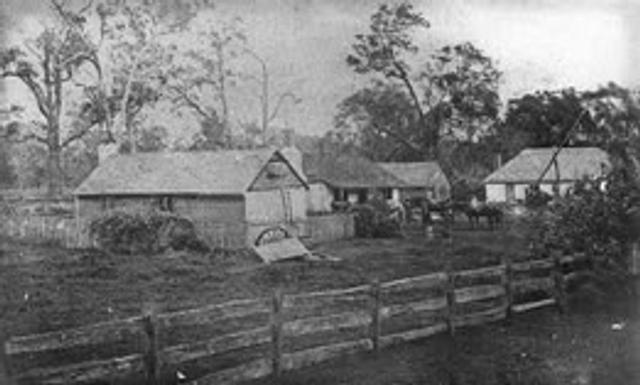
Eelup Farm. Photo courtesy of the WA State Library
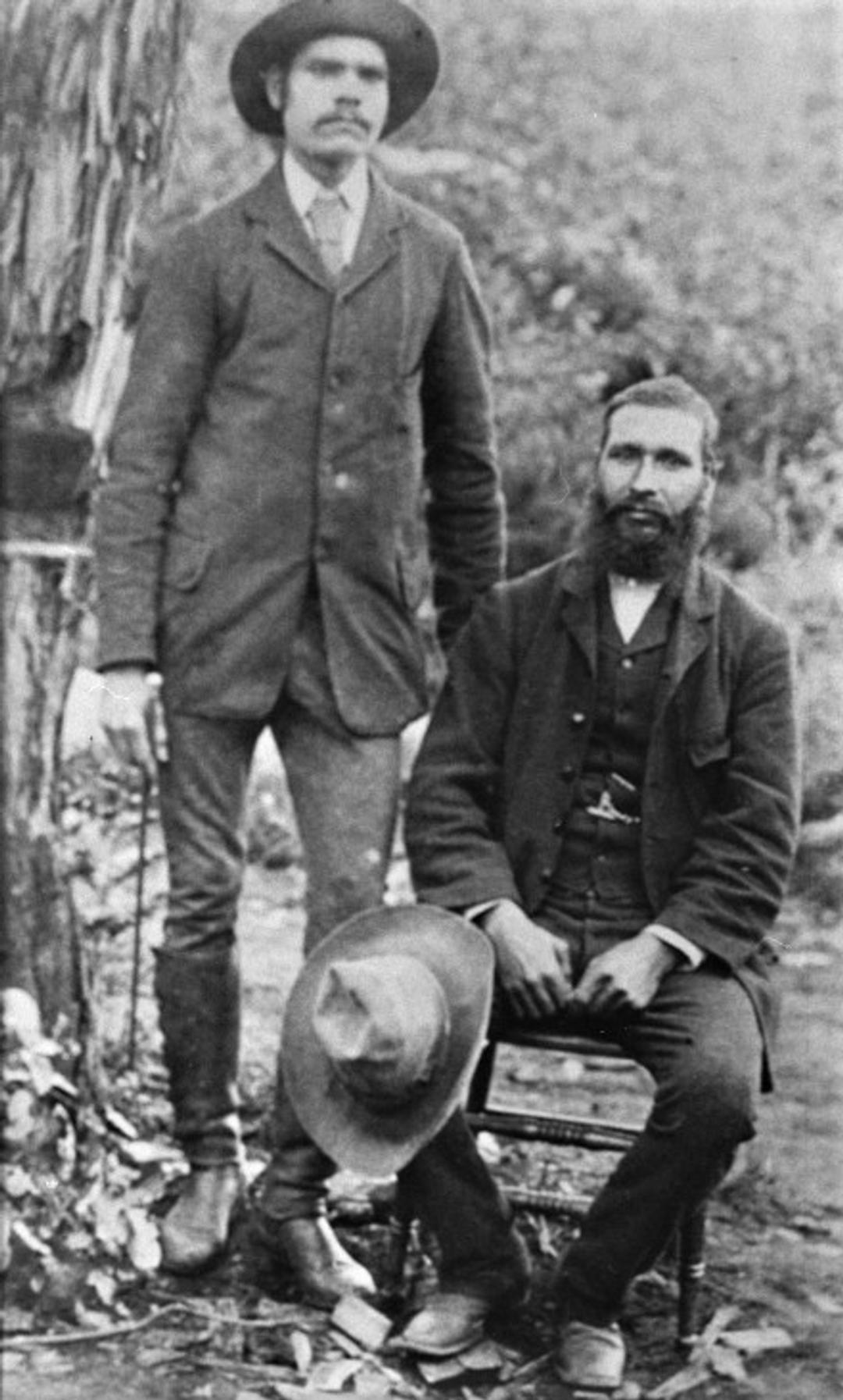
Yebble and his son Fred. Photo courtesy of WA State Library
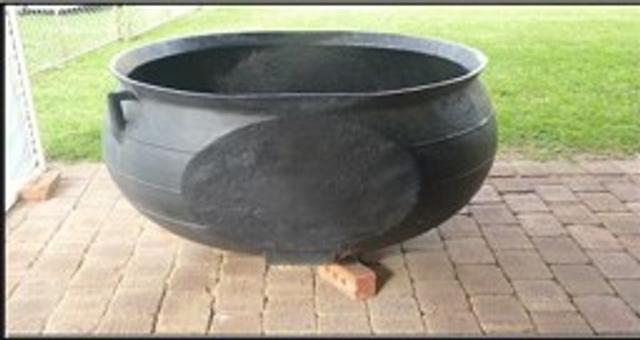
A try pot from Koombana Whaling Co. Courtesy of King Cottage Museum, Bunbury
The McGregor family has worked in almost every type of fishing, working on commercial and charter boats in Western Australia. Daniel McGregor (born 1815) first came to Western Australia from Lanark, Scotland via the Eliza in 1831 with his mother Helen McGregor and stepfather John Scott.
From 1838 they established Eelup Farm in the Bunbury region on property owned by Governor James Stirling who wanted care taken of his valuable horses.Helen was the first white woman to live in the Bunbury area, and she is commemorated in the Western Australia Women’s Hall of Fame for her nursing and midwifery which she applied throughout the district.
That year (1838) in England the paddle steamer Forfarshire was under the command of Captain John Humble.He had married into the McGregor family.Captain Humble and his wife lived aboard.They perished when the steamer wrecked on Farne Islands, off the Northumberland coast.
At the age of 15 years as the eldest boy in the family Daniel brought the family’s stock overland to the property. He established a mail run through the bush on foot bringing mail fro Bunbury.
In 1840 John Scott and others established the Koombana Whaling Company. Daniel was the first McGregor to go to sea in Western Australian waters. The company employed local Wardandi Noongar people as crew members and paid them 2/6 when a whale was landed, three meals a day and £1 at the end of the whaling season. Bay whaling was dangerous because they used small boats to get in close to harpoon a whale and tow it to shore for processing. There are relics of the Koombana Whaling Company at the Bunbury’s King Cottage Museum.
In 1858 one of the small boats capsized when a whale towed it out to sea. Whaler Robert Heppingstone and a 1st nations oarsman were drowned. Local cemeteries tell the story of the dangers of bay whaling.
Eelup Farm (which was where the ‘big roundabout” is in Bunbury) was passed to another family after John Scott died because there was no written agreement between the Stirling and Scott families.Daniel married Agnes Lockhart in 1850 and together they had nine children. He returned to farming and eventually bought his own property Comet Vale at Quindalup in 1856 and raised his family there. Daniel remained on his farm until he died in 1898. He was buried in the Busselton Pioneer Cemetery.
Yebble (known as Sam Isaacs) was employed by the McGregors. Outside of whaling seasons he was a stockman for the Bussell family.His mother was a Wardandi woman, and his father was a Native American who jumped ship from an American whaler. Yebble’s Afro-American wife was a whaleship cook before she married him.
When the Georgette ran ashore in 1876 Yebble instigated a rescue mission with the aid of Grace Bussell. [Learn more about Yebble Isaac here.] In October 2024 Matt McGregor (a descendent commercial fisher) and his cousin Andrew were invited to the opening of a permanent display at the Old Court Museum in Busselton. Their ancestors’ part in the rescue is acknowledged in the museum display.
One of the exhibits is a letter from a Georgette survivor called Annie Simpson, one of the survivors taken in by the McGregors after the wreck. Annie stayed in their home until a ship came to take survivors back to the Swan settlement. [Read about Georgette here.] Annie’s letters show details previously unknown about the rescue. She remained in contact with the McGregors for the remainder of her life.
Constant contact with American whale ships enabled the first four southwest settler families to acquire tea, sugar and tobacco and items like boots and tools.They traded timber and labour for repairs, fresh meat and vegetables and sold off their whale oil.
The McGregor family diversified into pilot boat and lighter work which proved lucrative because ships had to anchor in deeper water and use small lighter boats to transfer their supplies out to them.Pilot boats guided the ships into safe anchorage. The coastline was uncharted and had treacherous rocks and reefs.
In 1882 the barque Agincourt parted her moorings in Hamelin Bay during a fierce gale. She was owned by an Adelaide branch of the McGregor family. She was fully loaded with timber when she struck the “Inside Rock”. Captain Patching ran her ashore to avoid wrecking. The ship’s carpenter drowned when a longboat carrying crew to shore capsized. [Read more about the Agincourt here.]
In 1900 three more timber barques were in the bay when a violent storm struck. They were Katinka, Lovespring and Norwester.Once again, the McGregor family sprang into action to rescue survivors who were clinging to rigging above the waterline.Gaven McGregor wrote a detailed letter to his son afterwards, describing the storm and the difficult rescue.The wind was so fierce it drove salt water inland.The McGregor rainwater tank was filled with salt water.[More about the wrecks here].
From the three wrecks there were nine survivors. The bodies of five Katinka crew members were found. The rescuers led by Harbour Master John Delfs buried them above the tideline in the bay. The tally of crew members lost from the other two barques is unclear. A 14-year-old lad and some others were not found. Gaven McGregor was the foreman at the coroner’s inquest for those who drowned.
Again, survivors stayed with the McGregors until they could be transported on a passing ship. Rescuers were awarded a bronze medal by the Royal Humane Society. Hamelin Bay was abandoned as a trading port after that. The wrecks of nine timber ships remain in the bay. The McGregors donated a Captain’s telescope and a ship’s gridiron from these wrecks to the Western Australian Museum.
In 1910 Eric McGregor was an Assistant Light Keeper at Cape Leeuwin Lighthouse. The Keeper was J.J. Lyons, and the other Assistant Keeper was D Miner. When the steamship Pericles wrecked on an uncharted rock the lightkeepers built fires using dry grass, scrub and kerosene to guide the 14 lifeboats through a narrow passage between the rocks. The boats landed without loss of life, except for Nelson the ship’s one-eyed cat. The Humane Society awarded Eric with a Certificate of Merit and the princely sum of five guineas. [Information about the Pericles here.]
When the Stefano sank at Point Cloates in 1875, First Nations people fed and cared for survivors. Their help was documented by the men who stayed with them until rescue came. [More about the Stefano can be found here.]
Neil McGregor operated a charter tour business for 35 years from 1969. Yardie Creek Tours offered boat tours, ocean experiences and land-based tours in Exmouth, Yardie Creek and Cape Range. Neil is acknowledged for his environmental knowledge in the birdlife brochure for Exmouth and the Cape Range and Conservation and Land Management (CALM) reports and publications.
When Yardie Creek Tours was taken over by the Department of Biodiversity, Conservation and Attractions, Neil’s son Matt skippered a boat to assist the Department to study whale sharks.
Records indicate Matt left school at 16 and gained his coxswain certificate that year. He finished his Master V and MED (Marine Engine Driver) qualifications when he was 18. His father’s charter business helped Matt accumulate his sea time, and Matt went on to work on board other commercial fishing and trawling vessels.
Matt was working in the same area as Miss Odete, a trawler that disappeared without a trace, taking her crew with her. [You can read the story of Miss Odette here]. After that tragedy trawlers were required to work with a sister boat for safety.
Almost every generation of the McGregors has seen an ocean tragedy, and almost every generation has been involved in a rescue mission. A long and interesting history for one family.
Story Contributors
Susan Dhu
References
Forgotten Voyages - Rediscovering the S.S. Georgette — Busselton Cultural Precinct
The Skeleton. A Quarterly Newsletter if the Australind Family History Society (Inc.) September 2014. www.australindfhs.o’g
https://museum.wa.gov.au/maritime-archaeology-db/wrecks
Exmouth and Cape Range Birdwatching Pamphlet.pdf
The South Western News, 4 January 1935, page 3
Southern Times, 21 April 1896, page 2
Bunbury Herald, 26 November 1898, page 3
The Daily News, 16 January 1886, page 3; 12 September 1889, page 2
The Herald, 13 February 1875, page 3
Perth Gazette, 21 February 1873, page 3
The Inquirer, 14 May 1884, page 2; 4 February 1857, page 3; 22 August 1855, page 1; 18 May 1887, page 2; 3 August 1888, page 2; 11 September 1889, page 4
The Land (NSW), 4 August 1922, page 12
The Murchison Times, 12 December 1907, page 3
The West Australian, 17 November 1888, page 3; 2 November 1900, page 6; 15 November 1900, page 7; 18 January 1936, page 6
Day Dawn Chronicle, 27 May 1903, page 3
Coolgardie Pioneer, 22 September 1900, page 15