Laurie Chivers
Country of Origin: Australia
W.A. Region Settled: Perth-Metro
"It is with great sadness that we've learnt that Laurie Chivers passed away and our thoughts are with his family and members of the Nedlands YC in this sad time."
So began the 2024 tribute to one of Western Australia's most influential boat builders. In the waters off WA's coast during the 1970s and 80s, if you asked a fisherman about their boat, there was a good chance they'd tell you it was a Chivers. The name became synonymous with quality fibreglass construction, seaworthiness, and practical design—and more than that, with integrity.
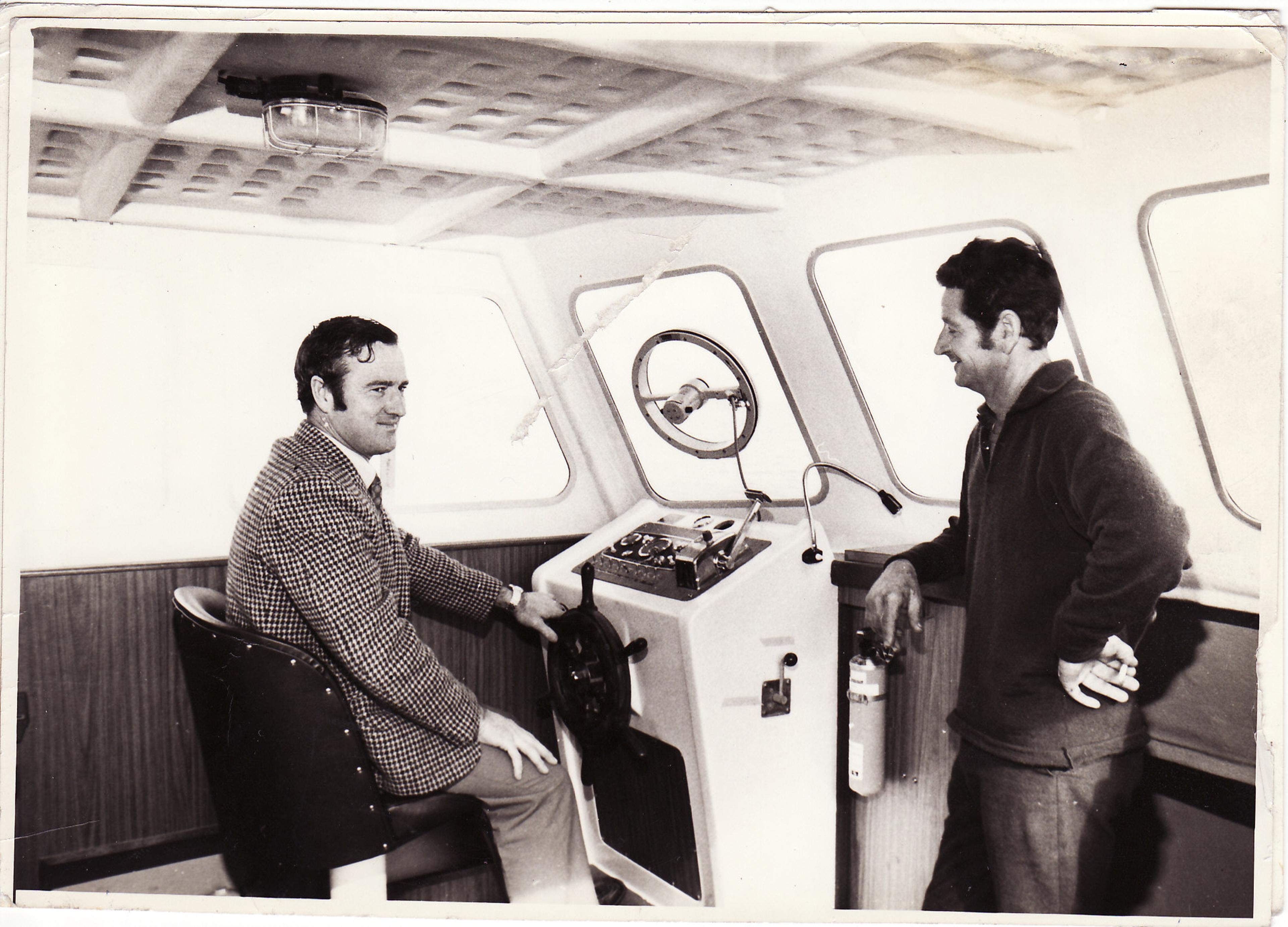
Laurie Chivers and Sam Saggars Jnr onboard the 'Nu Mako' June 1973
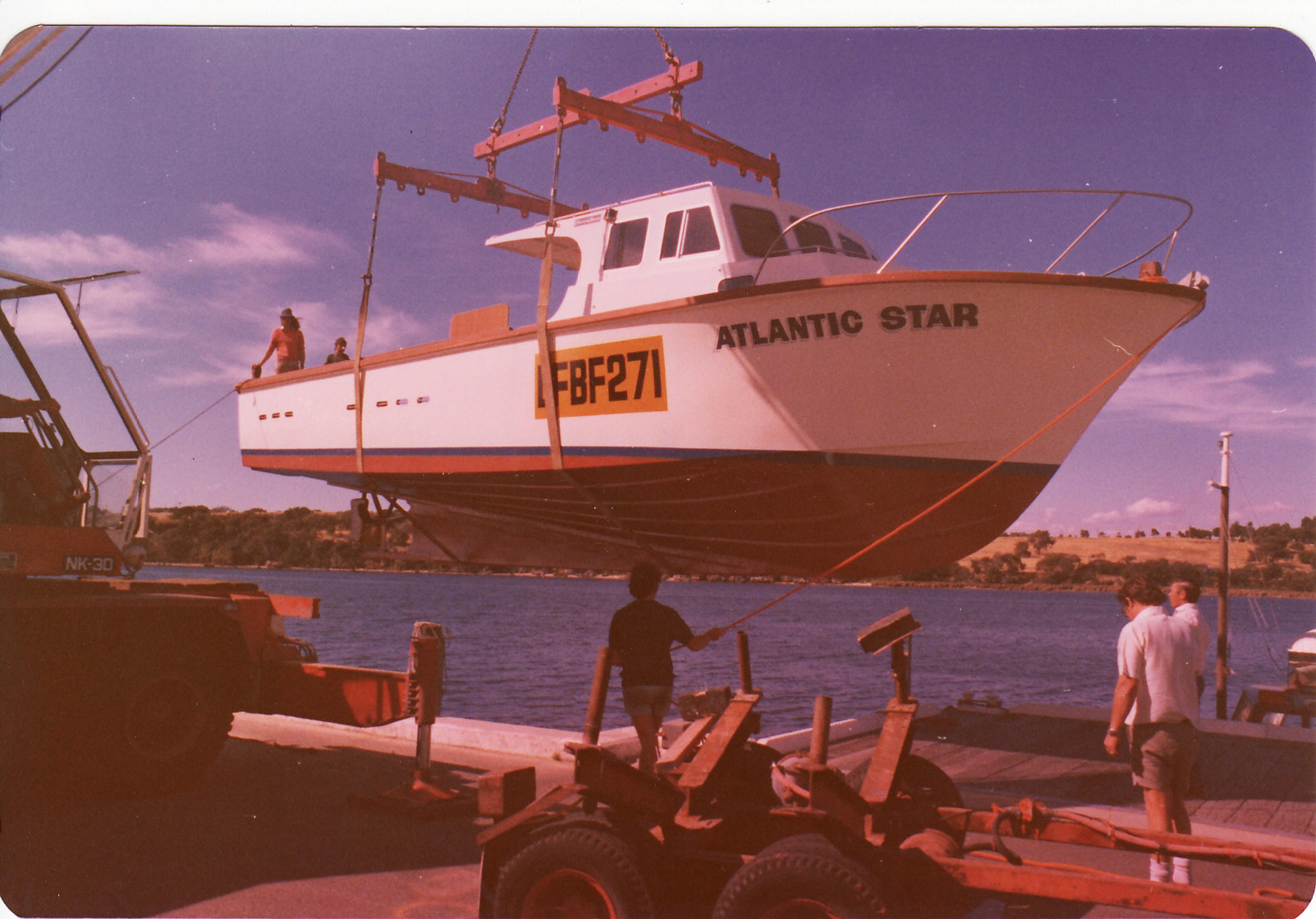
Atlantic Star built for Tony Collova
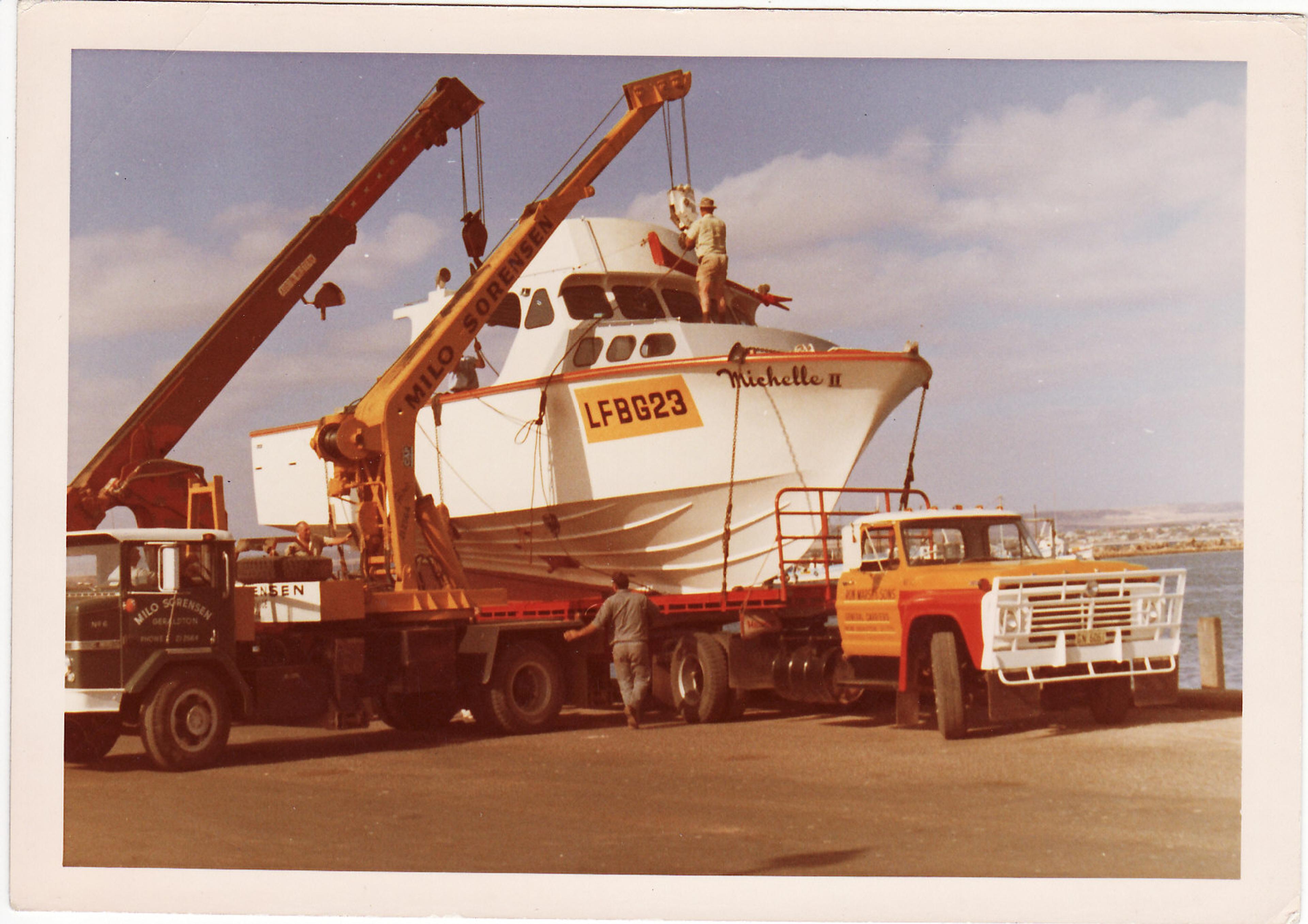
"Michelle" built for M. Gontier
When Laurie gave you a price, that was the price, as Geraldton fisherman Aldo Marsiello learned when he tried to negotiate. Laurie resisted until he finally tore the quote in two and told Marsiello to leave. Marsiello quickly changed his tune, accepting the quoted price. Laurie understood fishermen, and they understood him.
From Broken Dinghy to Boat Building
Laurie's journey began in 1953 when, at just 15, he took up a carpentry apprenticeship. His passion was sailing. In January 1955, aged 17, he saved 30 pounds from his wages and bought a Vee Jay dinghy called Gay Donna. Shortly after, he hit the Karrakatta Bank near Claremont Yacht Club, breaking the centerplate and damaging the boat. Rather than pay for repairs, he built his own boat in a small lattice shed behind his parents' rented Nedlands home. That decision would change his life—and eventually, the lives of hundreds of WA fishers.
In late 1957, not yet finished his apprenticeship, Laurie left the building trade and started working for himself, building Vee Jays and timber spars. By 1959 he built his first Skate, and neighbours allowed him to use their garage. But by 1960 the work had increased and some neighbours were unhappy about late-hour customer calls. That year, Laurie and his father built a workshop at Nedlands Yacht Club.
The Racing Years
Laurie's boats quickly gained reputation. His Vee Jays featured innovative design—a pronounced bow spring and long planing run that made them "unbeatable flying machines in a breeze." But his spars became legendary. "Only Chivers Spars have the two red bands - your guarantee of perfection," became his tagline. As sailors recalled: "They were the ultimate status symbol."
Laurie wasn't just a builder; he was a champion sailor, winning the National Championship three times in the early 1960s sailing his Skate Venom with Ken Court. In 1962 he built a Vee Jay for 17-year-old John Bertrand for 90 pounds. Bertrand's Chivers VJ Triad won all five heats of the 1963 Junior Commonwealth Championship. Bertrand would later become famous as skipper of Australia II, winner of the 1983 America's Cup.
By 1963 the Nedlands shed was too small. A new factory was built in Melville, south of the river. The Nedlands workshop continued until 1969, when all boatbuilding moved to Melville. There, production expanded to include Moths, Herons, GP14s, Cherubs, and Juno yachts. By 1966 timber spars gave way to aluminium extrusions, and in 1973 the spar business became Champion Spars.
The Pivot: Commercial Fishing Boats
By early 1970s, as Ann Chivers documented, "Laurie ceased the building of sailing dinghies, and production turned towards pleasure boats, fishing boats and pilot boats up to 16.5m." The WA fishing industry was booming, particularly rock lobster, and fishermen needed better boats. Traditional timber vessels required constant maintenance—they leaked, rotted, and wore out quickly in WA's harsh marine environment.
When fibreglass emerged, many traditionalists scoffed. One Fremantle boatbuilder told Laurie: "If God had wanted fibreglass boats, he would have made 'Fibreglass Trees'!" But Laurie saw the future clearly. His commercial boats, designed by naval architect Leo van Braekel and surveyed by Ted Botica, were built to exacting Lloyd's and Harbour and Light Department standards.
The Record-Breaking 40-Footer
In September 1970, Laurie completed what was claimed as "the biggest commercial fibreglass hull built in Western Australia"—a 40-foot vessel for Harold Mitchell of Geraldton. The Western Australian Newspaper reported the hull was "designed and built by Laurie Chivers and Co" and "built to 20 per cent above Lloyd's specifications." Senior surveyor Alan McAllister verified it met all commercial craft standards. The hull used hand-laid woven-glass fiber bonded with polyester: 7/8-inch thick below the waterline, 1/4-inch above.
The Working Boats
The 35-foot fishing/workboat became Chivers' most popular design, marketed as "the most popular fishing vessel on the coast." With 12-foot beam and 3-foot draft, these versatile boats like the Wild Goose II became familiar sights from Fremantle to Geraldton.
Later, the 47-foot design became the flagship. With 14-foot beam and 4-foot 2-inch draft, these weren't just fishing boats—they were homes at sea. The first, Michelle II, was built in 1970 for the Gontier family. In 1973, Nu Mako emerged from the Melville factory, powered by a 120hp Volvo. July 1974 saw West Winds for Dave McGowan, followed by Tony Collova's Atlantic Star. The final documented 47-footer, Alice, was built for Jim Cooper in 1986.
The Melville Mail of November 16, 1972, captured a launch at the Raffles Hotel jetty: a new crayfishing boat for L. Dawe of Wedge Island. The Sandpiper, registered LFBF418, featured "a 240hp GMC Penta engine, twin steering stations, dual radio stations, echo sounder and autopilot. Mrs. Dawe "splashed the traditional champagne over the bows before the boat was lowered into the river. Incidentally, the launchings at the Raffles were to ensure that the owners could go over to the hotel and buy a 'carton' to consume after launching...
Boats for the Divers
In the late 1970s, Laurie built five or six 23-foot Safari boats for abalone divers including Peter Clausen, Terry Adams, and Sonny. When Peter's boat was being built, he'd arrive at the Melville factory in an MG Sports car accompanied by a huge Great Dane—Peter was also a very big man, making the sight memorable.
The August 1976 Australian Trading News featured the Safari as "an exceptionally safe boat, incorporating polyurethane foam flotation." With 11 square meters of workspace, two full-length berths, and solid bronze hardware, it was powered by a 125kW Volvo achieving 28 knots. The 'Safari' was used extensively by offshore abalone divers in Western Australia. They achieved outstanding results.
Character and Commerce
Laurie's relationships with clients transcended business. Michel Alfonse Gontier from the Seychelles couldn't read or write, so his wife Margaret handled paperwork. After accepting the contract, Michel left a bag of cash and said they'd return from England in a few months. When Laurie joked he might not be there when they returned, Gontier fixed him with a steady gaze: "I WILL FIND YOU!" The boat, the Michelle II, was ready when the Gontiers returned.
When fisherman John Gazeley needed repairs at Cervantes, Laurie stayed at his camp. For breakfast, John offered wild pig meat that looked decidedly off. Laurie politely refused and went to find a burger, despite John insisting he wouldn't get fat eating wild pig. Laurie said he'd rather get fat than eat it.
Payment sometimes came unconventionally. A boat-size bag of live crayfish was often payment for work at Lancelin. One memorable time, Laurie returned with a bag of crays and tipped them out on his front lawn. They took off much to the amusement of the Chivers children and neighbours who helped get them out of the garden.
The Legacy
By the late 1970s, commercial fishing boat production largely ceased as Chivers Marine shifted to pilot boats. The first, Sir Frederick Samson, was built for Fremantle Port Authority in 1977. From 1978 to 2004, the company concentrated on pilot boats for ports in Melbourne, Noumea, and Sharjah, plus navy personnel boats. In 2004, Chivers Marine ceased all fibreglass boat production. Laurie passed away in 2024, but the business he founded in 1958 continues under family ownership, with son Luke Chivers at the helm.
Walk along any WA waterfront and you'll still see Chivers boats working. Many rock lobster boats from the 1970s and 1980s remain in service—testament to construction quality and design integrity. Laurie understood fishermen. He built boats for people who made their living on the water, who needed reliability more than flash, substance over style. The two red bands that marked his famous spars—"your guarantee of perfection"—might be gone, but his legacy remains afloat in harbours from Fremantle to Geraldton, in fishing boats still working the rock lobster grounds, and in memories of families who made their living aboard Chivers-built vessels
Story Contributors
Ann Chivers
James Paratore